
 View All Posts
Simple Interest Versus Compound Interest on a Loan
By Martel PellerinMay 21, 2026
Customers often ask us when using TValue software, “Should I structure a loan using simple or compound interest?” The answer depends on what the loan agreement specifies and not every agreement clearly defines the computation method. In general, borrowers benefit from simple interest, while lenders may benefit from compound interest, especially when payments are missed. In many cases, however, financial institutions don’t offer a choice at all.
Understanding the Two Interest Methods
Simple Interest (U.S. Rule)
Simple interest is calculated only on the principal balance. It does not accrue interest on previously earned interest, making calculations straightforward and predictable.
Compound Interest (Normal Amortization)
Compound interest is calculated on the principal plus any unpaid interest from prior periods. When a payment is missed or doesn’t fully cover the interest due, the unpaid portion is added to the balance, creating “interest on interest.”
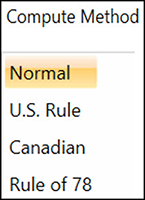
Normal = Compound Interest
U.S. Rule = Simple Interest
How These Methods Are Used in Practice
- Compound interest is generally used for revolving credit. Other considerations depends on the product type and regulatory limits.
- Financial institutions typically use simple interest for most consumer loans.
- Some states prohibit compounding, requiring lenders to use simple interest.
- Most informal or “friendly” loans such as loans between family members or between a company and an employee use simple interest because it does not penalize the borrower.
- When cases go to court for a settlement, they are almost always simple interest.
Is One Method Better Than the Other?
- There is no inherently “right” or “wrong” method. If payments are made on time and interest is fully paid, both methods produce identical results. Differences arise only when interest goes unpaid.
- Over long periods of missed or deferred payments, compounding can significantly increase the total interest owed. This is also how the IRS calculates interest on tax underpayments using daily compounding.
Using TValue for Either Method
TValue supports both approaches. You can change the setting under Configuration > Compute Method. To apply the same method to all future schedules, select Defaults and save your configuration for future schedules. To compare the impact of compounding, switch between Normal and U.S. Rule, then review the results under Rounding. The Rounding amount will show you the impact of compounding.
With TValue, you can choose the method that matches your agreement or your modeling needs.
If you have questions about which method to use or how to set it up in TValue, our Support Team is always happy to help at 800 426 4741 or support@TimeValue.com.